Dialogue Details
Discussion with the Constitutional Amendment Task Force
Discussion with the Constitutional Amendment Task Force
May 10, 2026
Lalitpur
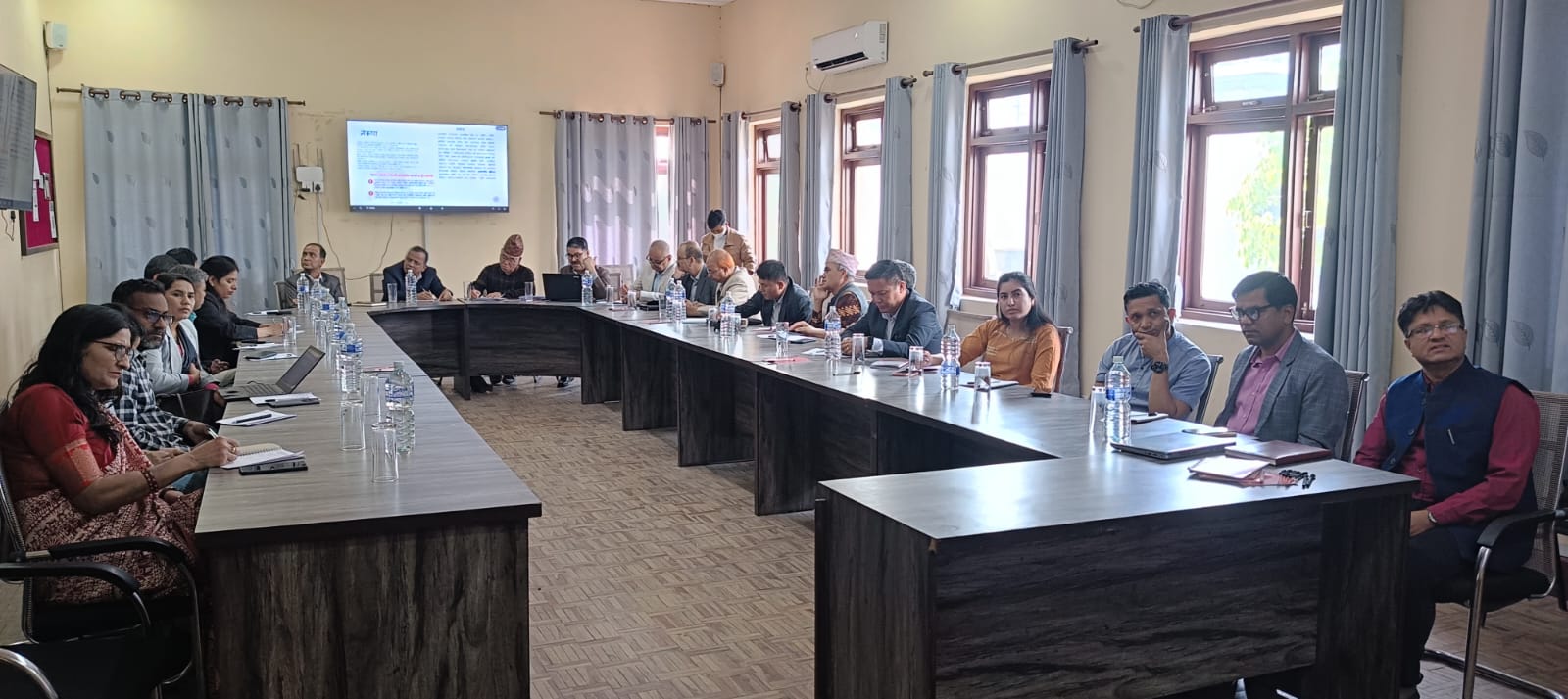
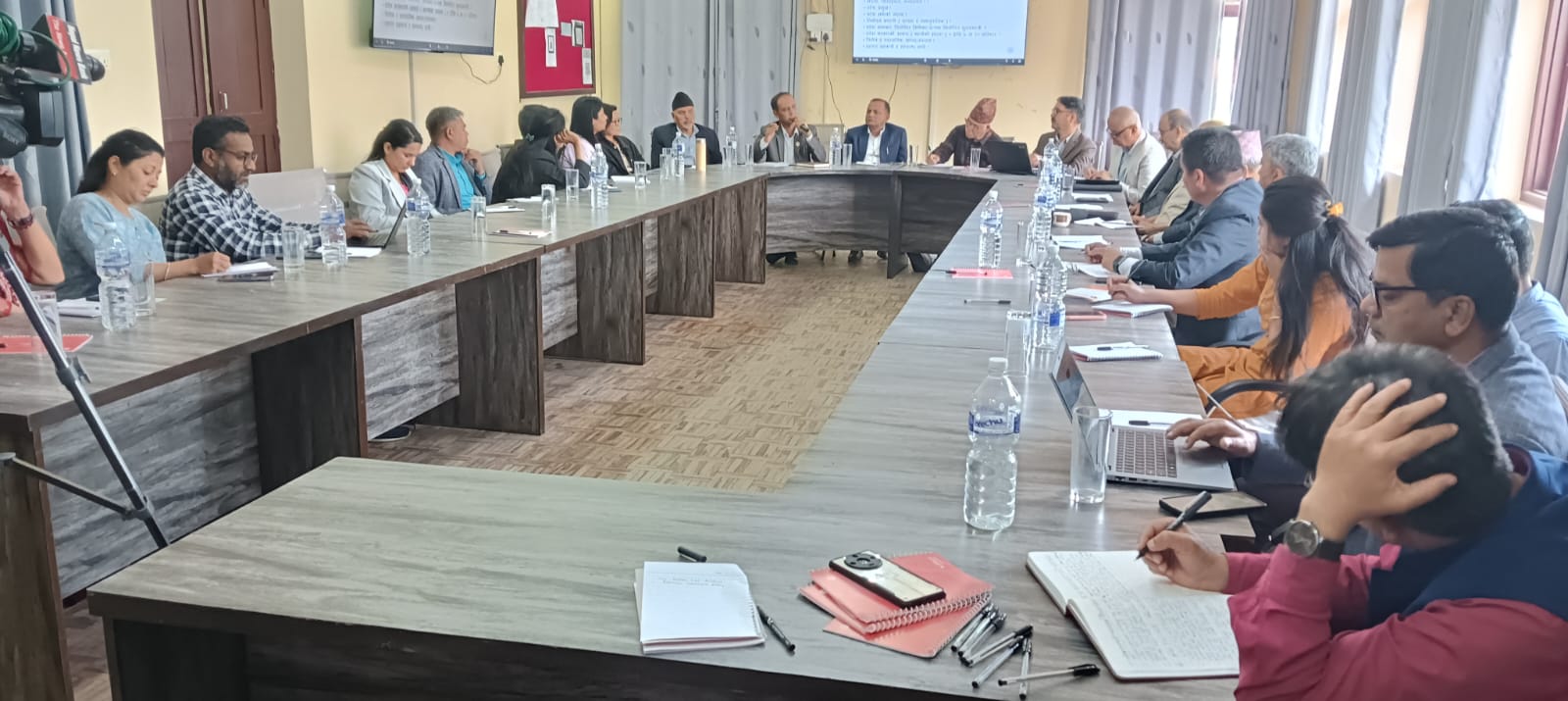
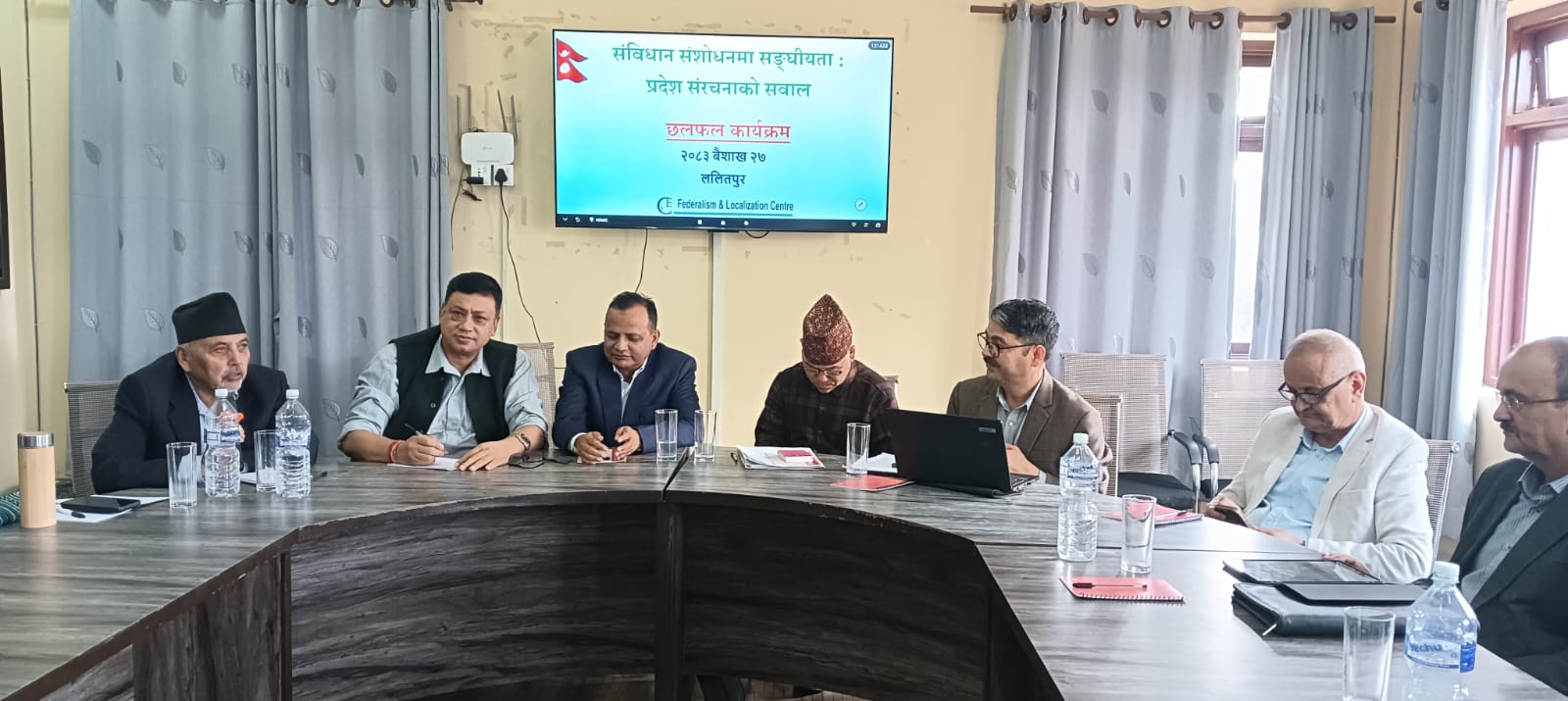
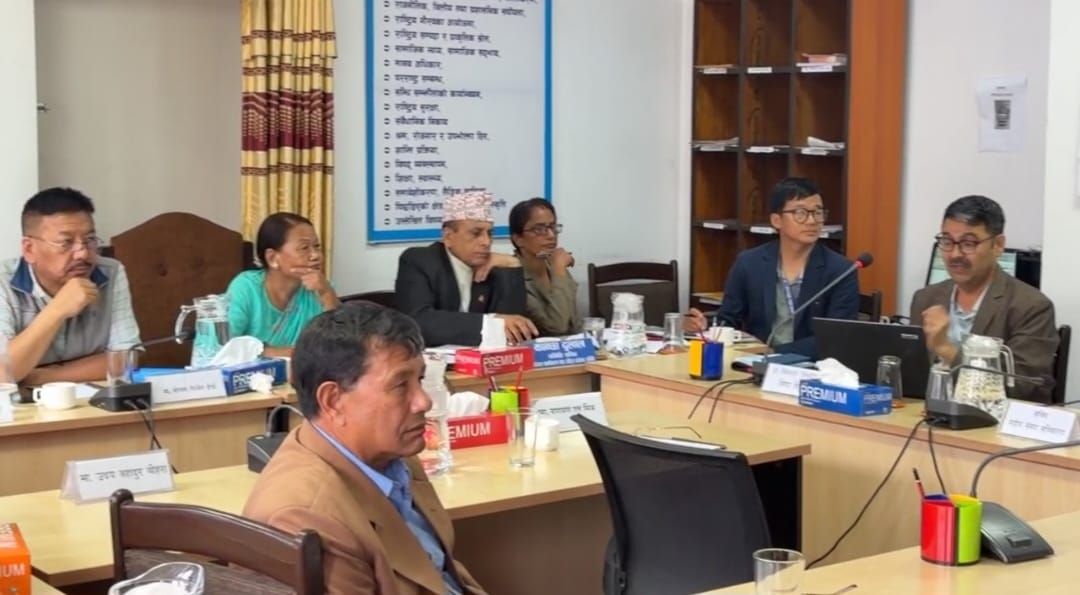
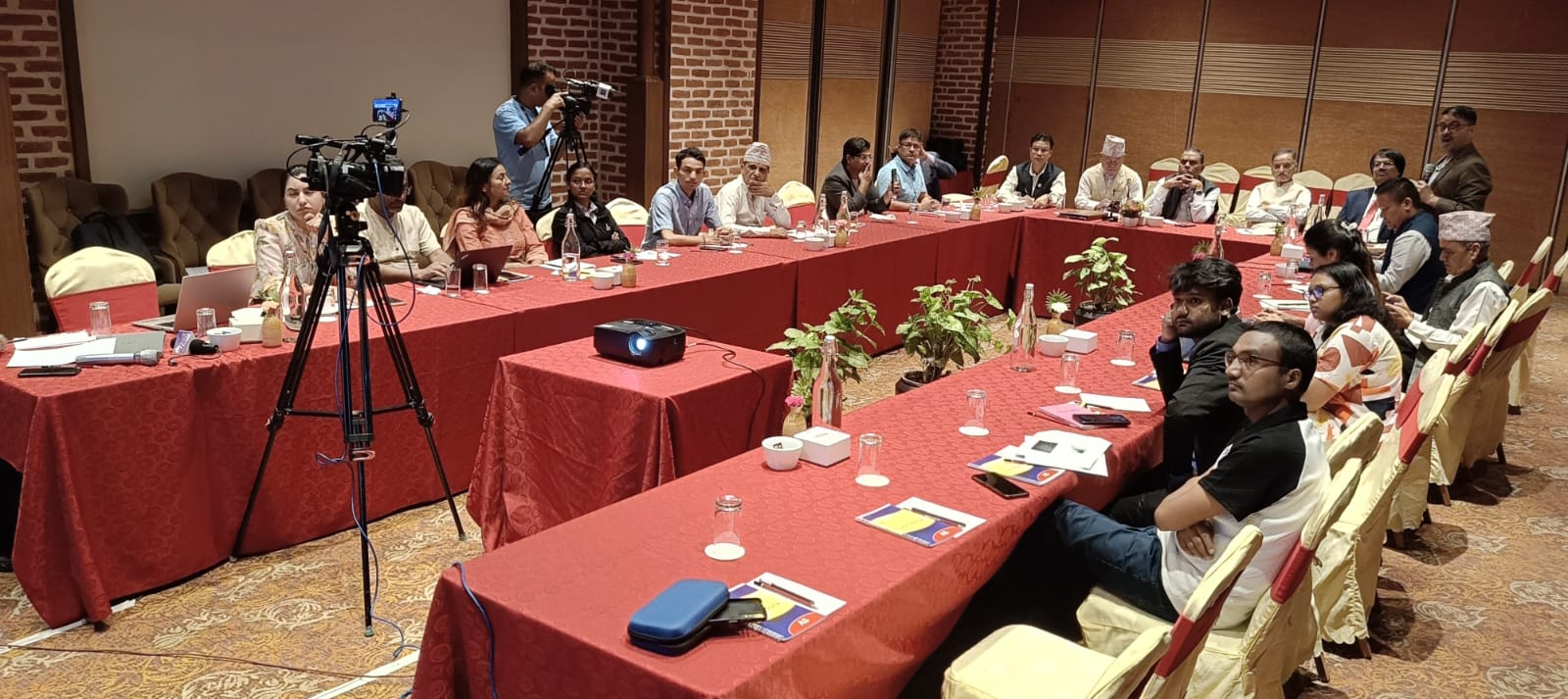
Federalism and Localisation Center (FLC) organized an event entitled "Federalism and Constitution Amendment: The issue of Provincial Structure". The event brought together members of the constitution amendment committee including Mohan Lal Acharya, Radhesham Adhikary, Bhisma Adhikary Dev Gurung and the Mohammad Lalbabu Raut. Dr. Khim Lal Devkota, Chair of FLC presided over the program and presented a paper highlighting the key issues the proposed constitution amendment. The participants discussed in great detail the conditions prevailing the constitutional amendment, the spheres where amendments are plausible to happen and the challenges and risks around the constitution amendment.
The event was attended by Indra Bahadur Baniya, Chief Minister of Bagmati Province. Participants included Mohanlal Acharya, member of the House of Representatives and member of the constitutional amendment task force representing the Rastriya Swatantra Party; Dev Prasad Gurung, task force member from the CPN (Maoist Centre); Dr. Bishmaraj Adhikari from the CPN-UML; Radheshyam Adhikari, leader of the Nepali Congress and constitutional expert; Lalbabu Raut; Nima Giri; Nima Lama, former minister of Bagmati Province and president of the Nepal Federation of Indigenous Nationalities; former Chief Secretary Dr. Somlal Subedi; former Vice-Chair of the Bagmati Province Policy and Planning Commission and land expert Dr. Jagat Basnet; senior advocate and former Chief Attorney of Madhesh Province Surendra Mahato; former member of the Karnali Province Policy and Planning Commission Dr. Dipendra Rokaya; Chairperson of Mahabharat Rural Municipality Kanchhalal Jimba; former Deputy Mayor of Belkotgadhi Municipality Kavita Dhungana; and experts from various sectors including JB Bishwakarma, Dr. Manchala Jha, Indu Tharu, Puja Chaudhary, Parashuram Upadhyaya, and Prakash Regmi.
Task force member and House of Representatives member Mohanlal Acharya said that an amendment draft would be prepared after open discussions at all levels. He noted that the number of provincial assembly members and ministries could be reduced, and that the electoral system could also be reconsidered and improved. He also stated that some constitutional commissions could be merged under an umbrella commission.
Dev Prasad Gurung said that reforms in accordance with changing times are positive, but a national consensus is necessary on what exactly should be amended. Without national consensus, constitutional amendment would not be easy. He added that development-related ministries and some commissions should be transferred to the provinces, while certain fundamental provisions should remain untouched.
Radheshyam Adhikari highlighted that federalism is not merely decentralization but also the sharing of power. Since the country’s governing structure has remained largely centralized from 2007 B.S. onward, Nepal’s political mentality remains fundamentally centralized. He also warned that a directly elected executive could be risky in a country like Nepal.
Bishmaraj Adhikari stated that the government has not yet presented a clear framework of what it wants to amend. He emphasized that strengthening federalism would strengthen the country.
Former Chief Minister of Madhesh Province Lalbabu Raut said that perhaps because federalism emerged under pressure from Madhesh, it was weakened and stripped of authority from the very beginning. He recalled that when he attempted to enact a provincial police law, he faced fear and threats from higher authorities. He described Nepal’s federalism as “an unwanted baby.” Although his party supports a directly elected executive president, he said that personally he does not support that model.
Nima Lama stressed that the concerns of Indigenous nationalities must be addressed and that provincial structure is at the core of federalism.
Rights activist JB Bishwakarma said that unless there is clarity on why federalism is needed, there can be no answer to what kind of federalism should be built. He also noted that discussions of inclusion often create irritation among elite groups.
Former Chief Secretary Dr. Somlal Subedi observed that Nepal has experimented with nearly every system except a directly elected executive, yet dissatisfaction remains. He added that powers have become fragmented.
Writer Indu Tharu said that the present provinces are not substantially different from the earlier five development regions. She added that there remains a dominant tendency not to regard oppressed caste and community groups as full citizens.
The program was chaired by federalism expert and president of the Federalism and Localization Center, Khimlal Devkota, who also delivered a presentation outlining the objectives of the discussion. The welcome remarks were delivered by Prahlad Lamichhane, and the session was moderated by Executive Director Prakash Panthi. At the conclusion of the discussion, Chief Minister Indra Bahadur Baniya delivered the concluding remarks and formally closed the program with thanks.

Dialogue List
-
FLC Chairperson Delivers Prese...
2026-09-12
-
Federalism Awareness and Youth...
2026-08-25
-
Strengthening Federalism Throu...
2026-08-23
-
Federalism: Constitutional Ame...
2026-08-21
-
Province Structure in the Impl...
2026-06-30